Tools and safety
Bring a flashlight, a tape measure, and a phone camera. Shut off power before the front cover comes off. On a plug-in unit, switch off and unplug. On a hardwired unit, which is common on 265V systems in hotels and towers, turn off the breaker and have a licensed electrician handle the connection. On a hydronic unit, have the super close the valves before anyone loosens a pipe.
Check one unit of each type in the building. Corner rooms, penthouses, and renovated lines often have a different model from the rest of the stack.
Check 1: The nameplate
Remove the front cover. The rating plate sits on the chassis, usually on a side panel or near the control box. Some older units hide it on the chassis base, visible only after you slide the unit forward.
Photograph the full plate. Write down:
- Model number, every letter and digit
- Brand on the plate, which often differs from the brand on the cover
- Serial number, which usually encodes the build year
- Voltage, amperage, and heater kW if listed
No plate? Check the unit next door, the managing agent's files, or old work orders. More on reading the nameplate.
Check 2: The sleeve
The sleeve is the metal box built into the wall. Measure the sleeve, not the chassis. A chassis is smaller than its sleeve, and ordering by the chassis gets you the wrong unit.
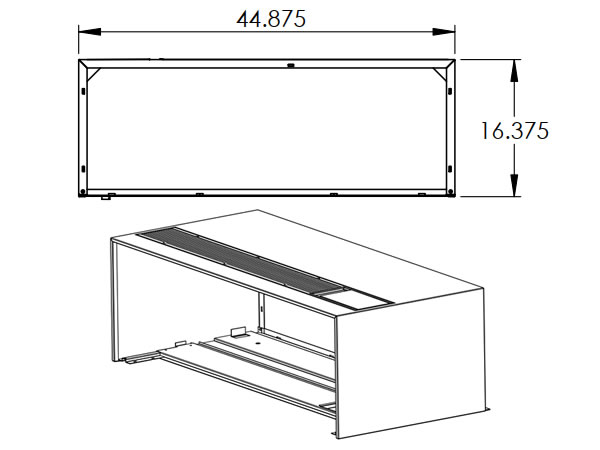
- Width: inside edge to inside edge
- Height: sleeve floor to inside top
- Depth: room-side face to the outdoor louver. Thick masonry walls in older New York buildings run deep.
- Top: flat or sloped
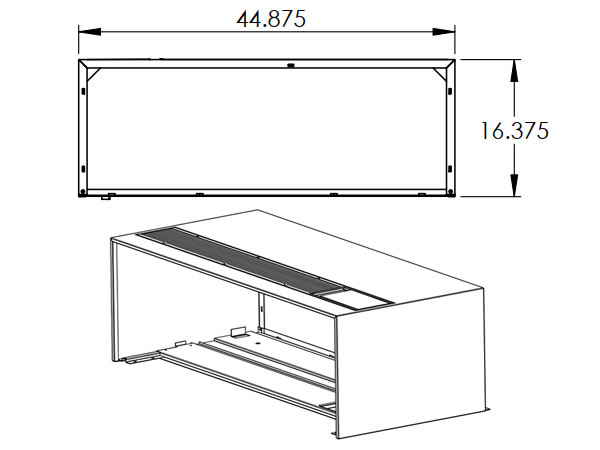
42 inches wide by about 16 high is the industry standard. Anything else is a legacy sleeve. Legacy widths of 32, 36, 37, and 44 inches turn up all over the city, along with three-piece K installations that have no single sleeve.
Check 3: The power
- Plug-in. Photograph the receptacle. A NEMA 6 shape is 208/230V. A NEMA 7 shape is 265V. Blade patterns differ for 15, 20, and 30 amps.
- Hardwired. The cable runs into the unit or a junction box. Read voltage from the nameplate and the breaker size from the panel.
Many New York high-rises supply 265V to the rooms. Match it. A 208/230V unit does not run on 265V, and the reverse.
Check 4: The heat source
- Hot water coil. Supply and return pipes connect above or below the chassis, often with a valve. The building boiler heats the room. Note top or bottom connections.
- Heat pump. The compressor reverses for heat, with electric backup. The model number or nameplate marks it.
- Electric resistance. A heater element. The nameplate lists heater kW.
Hydronic units are far more common in New York than in most markets, because so many buildings heat centrally. How the heat choice plays out in New York.
Check 5: The louver
Look at the outdoor louver from the street or from the room with the chassis pulled. Is it a stamped grille or a flush architectural louver? Is it bent, clogged with debris, or rusted? Does it match the rest of the facade?
A chassis built for your sleeve keeps the louver you have. Changing louvers across a facade is a project of its own.
Check 6: The building's rules
This is the check that trips up New York jobs. Before you order, find out:
- Board or management approval. Co-ops and condos often require an alteration agreement or at least notice to the managing agent, even for a unit swap. Some boards specify the model.
- Landmarks. If the building is a landmark or sits in a historic district, the Landmarks Preservation Commission permits most HVAC work on the facade, including new through-wall louvers. A chassis that reuses the existing louver avoids changing what the street sees.
- Delivery rules. Freight elevator reservations, delivery hours, and a certificate of insurance from the carrier.
- Who installs. Many buildings require a licensed and insured contractor for hardwired or hydronic connections.
More on PTAC replacement in co-ops and condos.
Choose the replacement
42 x 16 sleeve, electric heat or heat pump
A current GE Zoneline slides in. AZES, AZHS, or AZVS by heat type. AZHS or AZVS for 265V.
GE ZonelineMcQuay, Singer, or Remington
A chassis built to the original McQuay sleeve, usually with a hot water coil.
McQuay replacementOther legacy sleeve, or 42 x 16 hydronic
Applied Comfort builds to your sleeve and your heat source.
Applied ComfortIslandaire, Ice Air, Trane, Friedrich, Amana, and Carrier units, and older Zoneline series, follow the same logic. The sleeve and the heat source decide, not the logo on the cover.
When the sleeve must go
Replace the sleeve only when the floor is rusted through and leaking into the wall, the sleeve is out of square, or the building is in a gut renovation and standardizing on 42 x 16. Otherwise a chassis built to the existing sleeve is faster, cheaper, and easier to get past the board.
Send your results
Quote checklist
- Model number and brand from the nameplate
- Sleeve width, height, depth, and top shape
- Voltage, amperage, plug-in or hardwired
- Heat source, and coil position for hydronic units
- Quantity, delivery address, and building delivery rules
Units ship from Louisville, Kentucky, or direct from manufacturer stock to the five boroughs, Long Island, the Hudson Valley, and North Jersey. See the service areas.